
.avif)
.avif)

.avif)



Chicco KeyFit Max Review: Infant Seat Maxxing
Car Seats
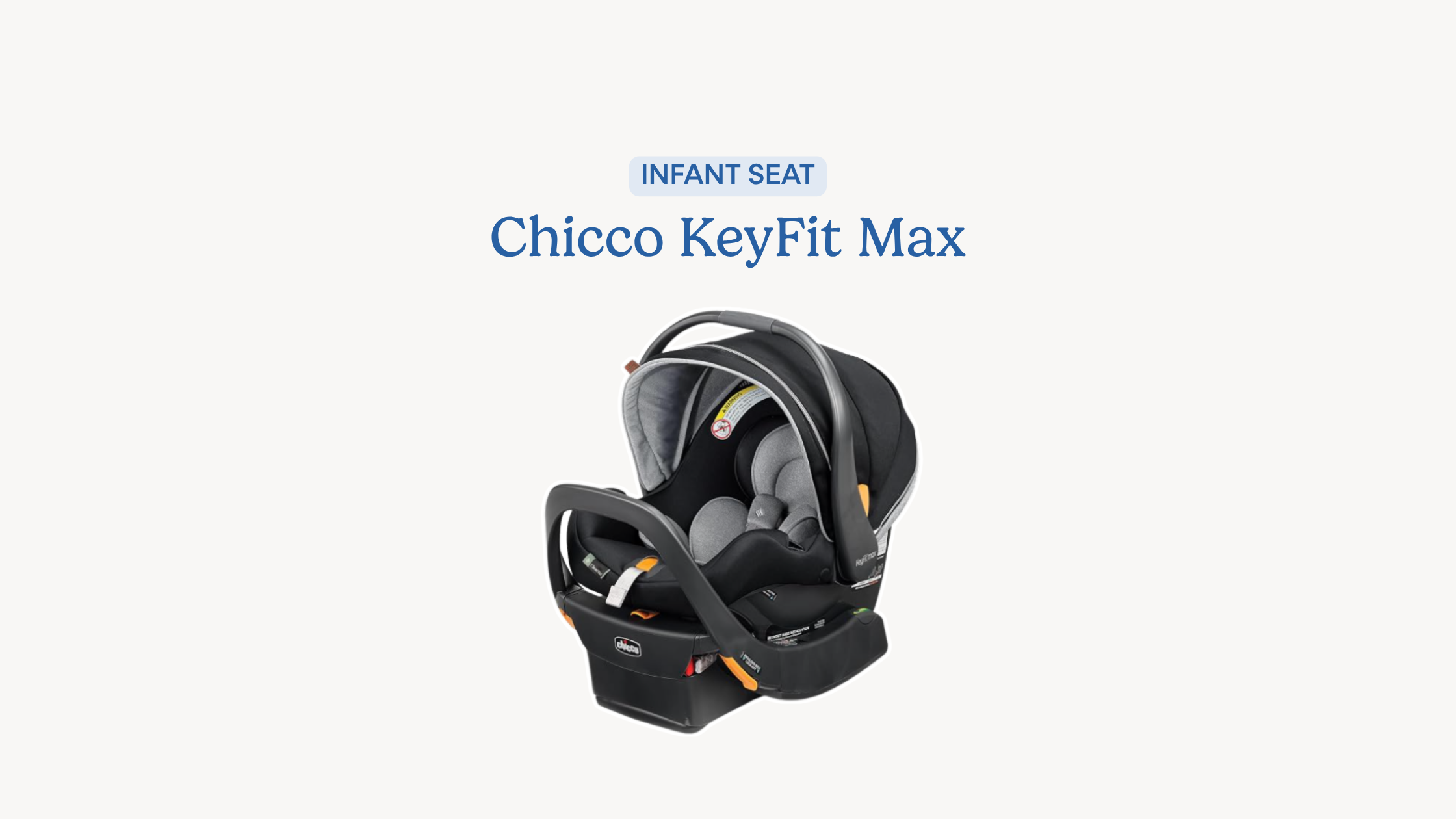
Everyone’s favorite question to ask a CPST is, “What’s your favorite infant car seat?” and the answer is usually some version of, “I can’t choose just one” or “It depends on the situation.”
But I’ll let you in on a little secret: You would be hard-pressed to find a CPST who doesn’t love the KeyFit line of infant seats. We share a collective sigh of relief when a parent tells us they bought a KeyFit because we know it’s almost always just going to work well.
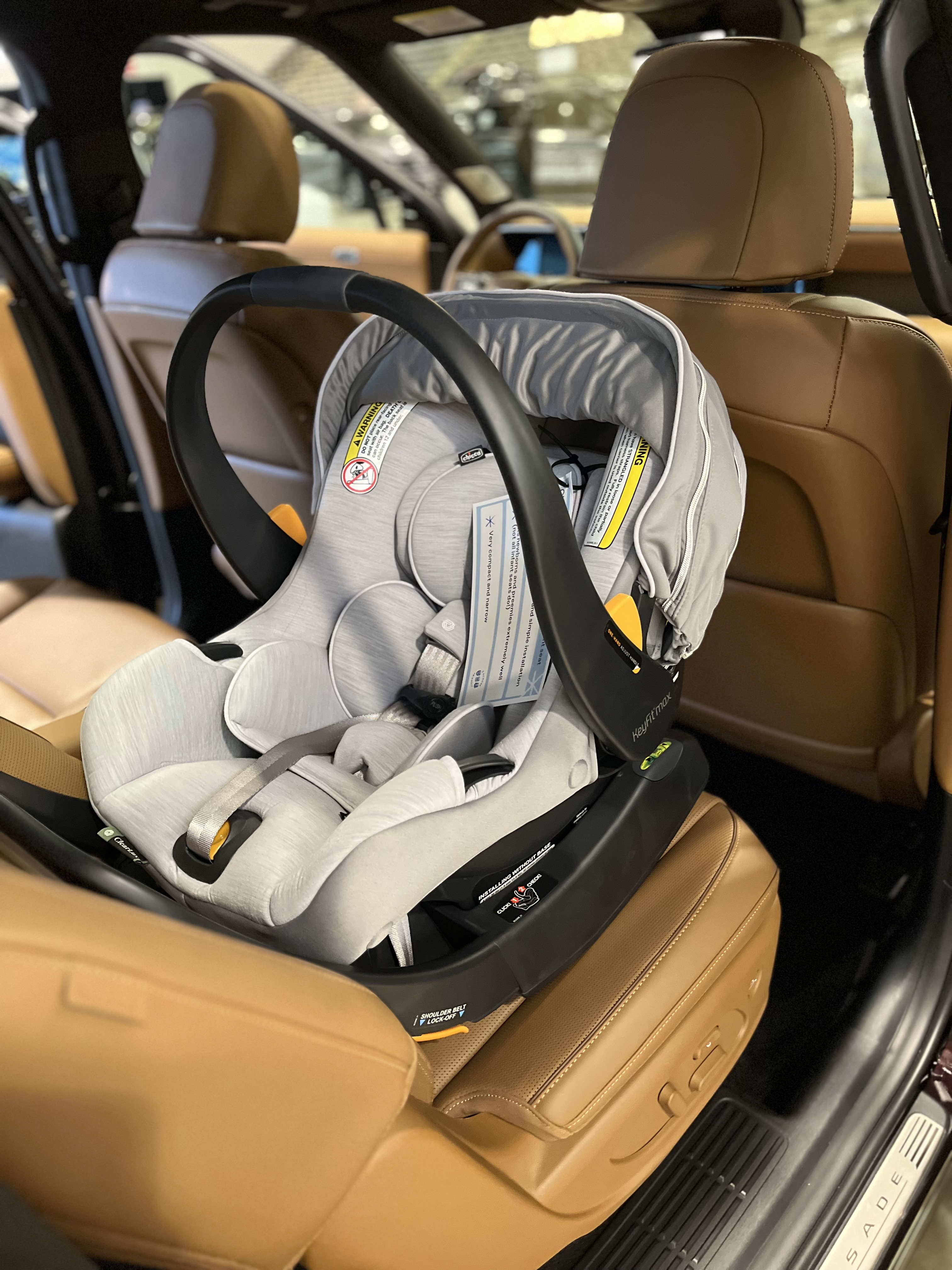
The Chicco KeyFit Max is the newest addition to the lineup, and somehow, Chicco managed to improve upon an already truly impressive infant car seat.
I’m Carly, a CPST and mom of three, and the KeyFit Max would surely be on my list if I were shopping for an infant car seat right now.
If you're a new mom or expecting, congratulations! We have a wonderful in-depth guide on the best car seats for newborns that I'll link here.
Consider the Chicco KeyFit Max if:
- You want an infant car seat that’s just easy to use. Installation is straightforward, the harness adjusts smoothly, and the KeyFit line has excellent vehicle compatibility.
- You want an infant car seat that’s really hard to go wrong with. This is the big reason CPSTs love the KeyFit line. It has excellent vehicle compatibility, easy installation, smooth harnessing, and a great fit for babies across a wide range of sizes. It manages to do all of that without being complicated to use.
- You need a narrow or compact infant seat. The KeyFit Max is just 17 inches wide and tends to take up less front-to-back space than many infant seats, making it a strong contender for smaller vehicles and tight setups.
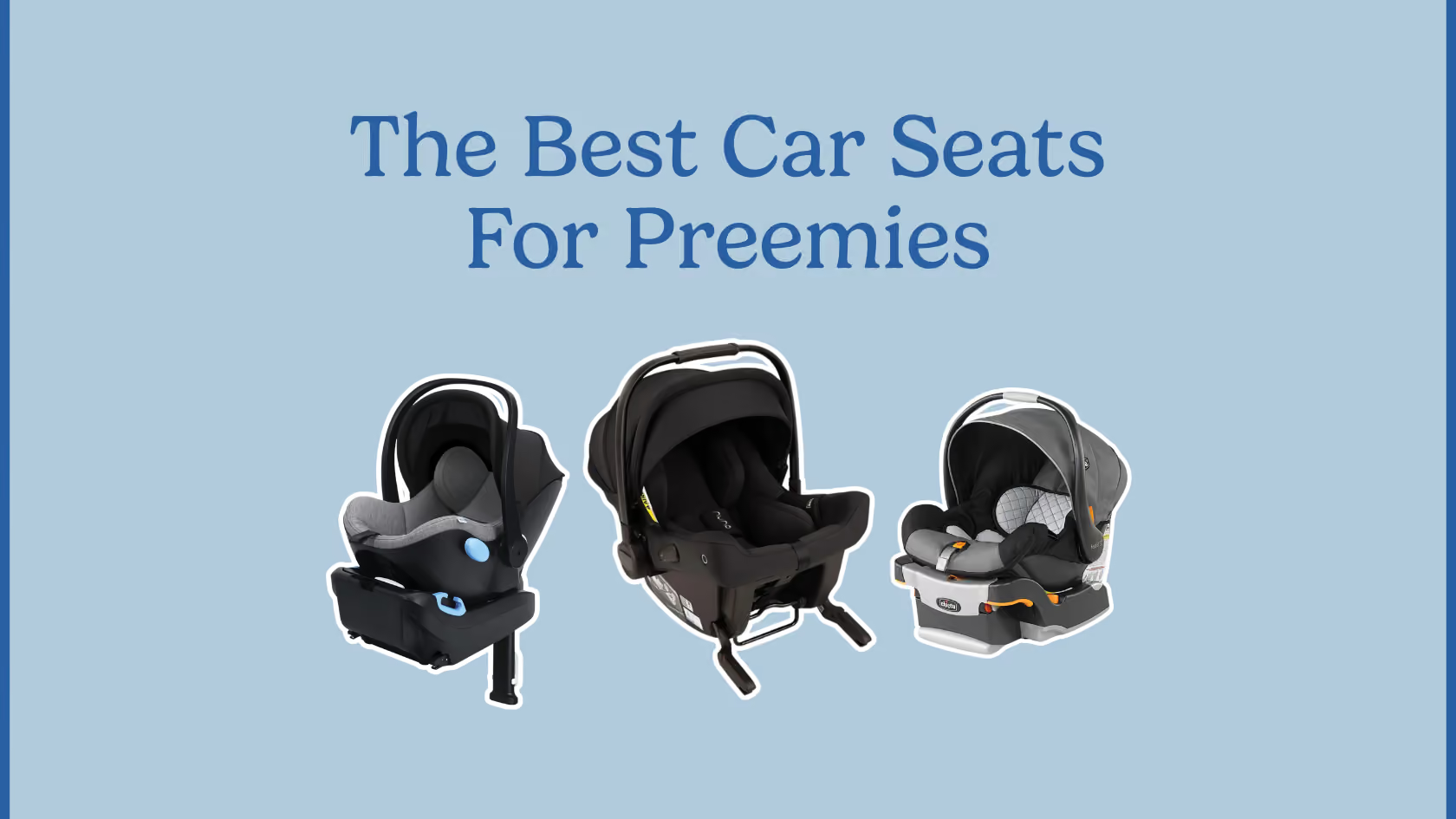
- You’re expecting a small baby. The KeyFit Max starts at 4 pounds and tends to provide a great fit for preemies and smaller newborns compared to some other seats with the same minimum weight.
- You want to use your infant seat for as long as possible. With a 32-inch height limit and a relatively tall shell, the KeyFit Max can give some babies more growing room than infant seats with a 30-inch maximum.
- You may need to fit three car seats across. Its narrow width, built-in lock-off, and anti-rebound bar design can all be helpful when you’re trying to make a tight three-across setup work.
- You want premium features without jumping to the highest infant car seat price point. Even the entry-level KeyFit Max includes many of the ease-of-use and thoughtful features I’d expect from a more expensive seat.
Keep looking if:
- A super lightweight infant carrier is one of your top priorities. The KeyFit Max carrier weighs 10 pounds, so it isn’t one of the lightest infant seats out there.
Chicco KeyFit Max Height, Weight + Key Specs
Here’s a quick look at the Chicco KeyFit Max specs:
- Price: $229.99 MSRP
- Rear-facing weight range: 4–32 pounds
- Height limit: Up to 32 inches
- Width: 17 inches
- Carrier weight: 10 pounds
- Expiration: 6 years
The Chicco KeyFit Max Just Works
Just like its cousin, the KeyFit 30, this seat is wonderfully straightforward. The vehicle compatibility is excellent, installation is a breeze, harnessing is smooth, and there’s really nothing complicated about it.
And honestly, that’s a big part of what makes the KeyFit line so easy to recommend. You get a lot of thoughtful features without adding a bunch of complexity to a seat you’ll be using every single day.
Chicco KeyFit Max vs. KeyFit 30: What’s the Difference?
The biggest difference between the Chicco KeyFit Max and the KeyFit 30 is the harness. The KeyFit Max has a no-rethread harness, which makes it much easier to adjust the harness height as your baby grows.
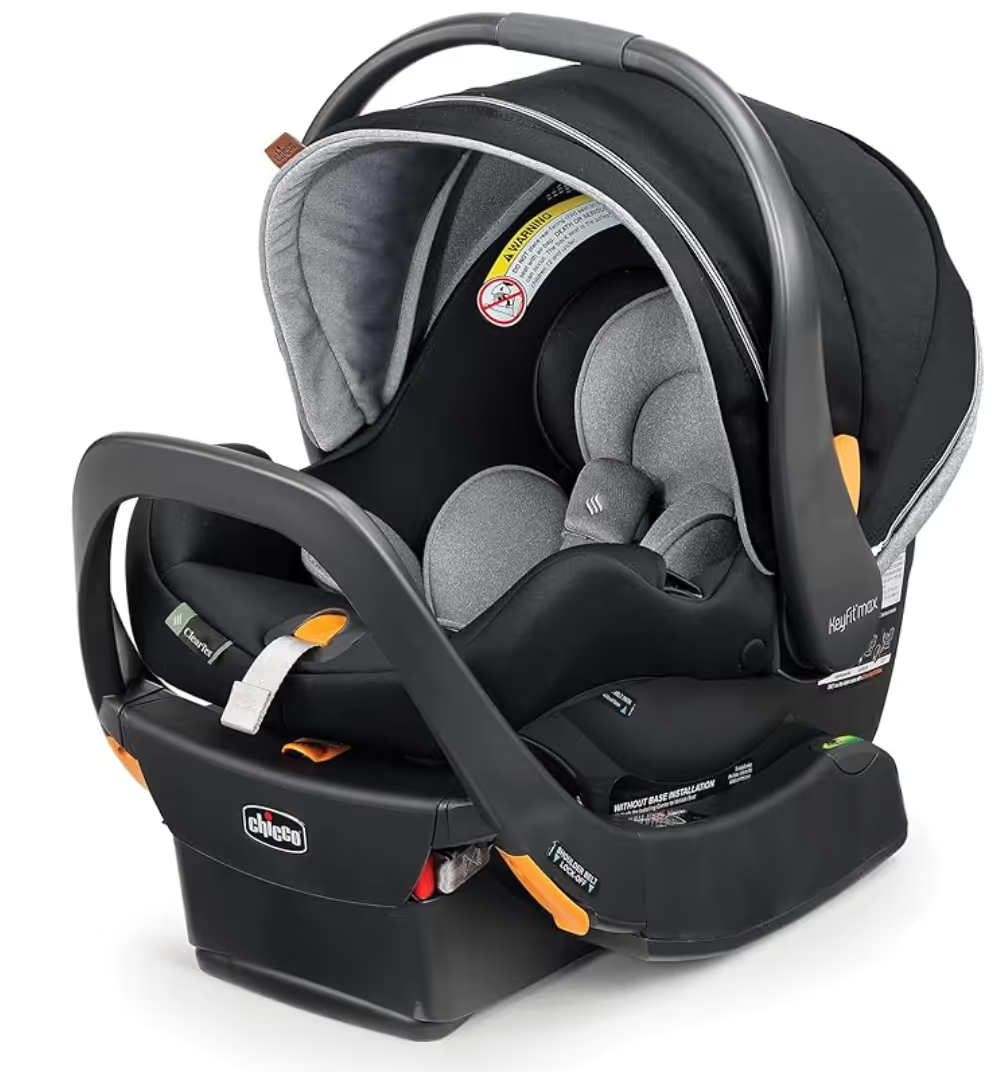
Instead of manually rethreading the harness, two orange buttons on the back of the KeyFit Max let you move the headrest and harness up or down together so the straps stay at or below your baby’s shoulders.
I also really like that Chicco managed to add a no-rethread harness without creating an overly bulky headrest. Some infant seats with no-rethread harnesses can push a newborn’s head forward, but the KeyFit Max headrest is minimal enough that their head can still tilt slightly back and to the side.
And if you already have a KeyFit 30, there’s another helpful compatibility detail: the KeyFit Max base is compatible with KeyFit 30 and older KeyFit 35 carriers. However, the KeyFit Max carrier can only be used with the KeyFit Max base.
What Strollers Are Compatible With the Chicco KeyFit Max?
The Chicco KeyFit Max is compatible with most Chicco strollers, as well as most third-party strollers like Mockingbird with the correct car seat adapter.
- Chicco strollers: Compatible with all Chicco strollers except the Liteway and Urbino.
- Mockingbird Single Stroller: Compatible with Mockingbird’s Car Seat Adapter.
- Mockingbird Single-to-Double Stroller: Compatible with Mockingbird’s Car Seat Adapter.
If you’re pairing the KeyFit Max with another stroller brand, always check that stroller manufacturer’s current compatibility list and whether an adapter is required.
Chicco KeyFit Max Base Installation
Sometimes the installation of this base still surprises me. Of course, you should always read your manual, but it’s almost hard to mess up this one, even on a “wing it” attempt.
Chicco thoughtfully uses orange touchpoints throughout the seat to give you a visual cue for parts that actually do something. The recline range works in every vehicle I’ve ever tried, and it adjusts with ease. The premium lower connectors also make installation and removal quick, and the base usually requires very little effort to tighten to less than 1 inch of movement.
How to Install the Chicco KeyFit Max Base With a Seat Belt
The seat belt installation is also refreshingly straightforward:
- Route the vehicle seat belt through the base and buckle it.
- Apply some compression to the base.
- Slide the shoulder belt into the orange lock-off on the opposite side of the buckle.
- Check that the base moves less than 1 inch at the belt path.
The anti-rebound bar built into the base is an added safety feature, and it also tends to nestle nicely into vehicle seat backs, making installation just that much easier.
One compatibility detail worth knowing: The KeyFit Max base is compatible with KeyFit 30 and older KeyFit 35 carriers, but the KeyFit Max carrier is only compatible with the Max base.
The No-Rethread Harness Makes the KeyFit Max Easy to Adjust
One major difference between the KeyFit 30 and the KeyFit Max is the no-rethread harness on the Max.
Squeeze the orange buttons on the back of the carrier and you can easily move the headrest and harness up or down to position the harness at or just below your baby’s shoulders. It also makes it quick to adjust the fit as your baby grows.
Compared to some other infant seats with no-rethread harnesses, the KeyFit Max headrest is minimally bulky. That allows a newborn’s head to tilt slightly back or to the side rather than pushing it forward into a less optimal position for breathing.
Don’t be afraid to remove the optional head insert for a newborn to see if that provides a better fit. The shoulder pads are optional and relatively thin, too, which I always appreciate. Required or overly bulky inserts and pads can sometimes create fit challenges for tiny babies.
The newborn positioner can be used up to 11 pounds and generally helps provide a nice, snug fit during those first few weeks.
Is the Chicco KeyFit Max Worth the Price?
At $229.99 for the entry-level version, the KeyFit Max sits around the middle of the infant car seat price range but manages to pack in features you’d typically expect to find on higher-end seats.
You get excellent ease-of-use features, a long range of use, and a few thoughtful additions that really set it apart. And if you want some of the more luxe upgrades, Chicco gives you a couple of higher-priced versions to choose from.
Does the Chicco KeyFit Max Fit Newborns and Preemies Well?
You might be surprised to hear that all infant car seats aren’t exactly created equal when it comes to fitting, wait for it: infants.
The printed height and weight limits don’t always tell the whole story. While it’s impossible to predict exactly how small your baby will be at birth, the KeyFit Max tends to cover the lower end of its range surprisingly well.
It has a 4-pound minimum and tends to provide a great fit for preemies compared to some other infant seats that also start at 4 pounds. The newborn positioner can be used up to 11 pounds to help provide a snug fit during those early weeks.
How Long Can You Use the Chicco KeyFit Max?
The Chicco KeyFit Max can be used from 4 to 32 pounds and up to 32 inches tall, but those numbers aren’t the only thing that determines when your baby will outgrow it.
Most babies outgrow their infant car seat by height before weight. If you’re hoping to stay in an infant seat for as long as possible, the KeyFit Max’s 32-inch height limit could give you several extra months compared to a seat with a 30-inch maximum.
The shell itself is also on the taller side, which can give long-torsoed babies more growing room before they outgrow the seat by the 1-inch rule.
What is the 1-inch rule? For most rear-facing car seats, at least 1 inch of space needs to remain between the top of your child’s head and the top of the car seat. A baby with a long torso may reach this point before hitting the seat’s stated height limit.
What’s the Difference Between the 3 Chicco KeyFit Max Models?
The KeyFit Max comes in three different versions at different price points. And once you figure out which one you prefer, the most complicated part of owning this seat is over!
I generally appreciate having a few versions of the same seat because you can choose which upgrades are actually worth paying for. You still get most of the great KeyFit Max features with the entry-level version for $100 less than the highest-priced option.
My biggest complaint with this setup? I’m usually a sucker for whichever color I like best, and the colors are different at each tier.
All 3 KeyFit Max Versions Have Flame Retardant-Free Fabrics
All three options feature soft fabrics made without added chemical flame retardants. The ClearLux version upgrades the softgoods to a merino wool blend.
What Do You Get With the Upgraded KeyFit Max Versions?
Both Zip versions add a zip-off cover for easier cleaning and an extended canopy for extra privacy and sun protection.
The ClearLux version also includes buckle tongue pockets that help keep the harness out of the way while you’re putting your baby into the seat.
All three versions include a European belt path, so you can also install the KeyFit Max without its base.
The One-Handed Carry Handle Is a KeyFit Max Standout
The real game-changer for me is the one-handed carry handle adjustment. What does that mean, exactly? You can actually lower the handle to put your baby in while holding your baby in the other arm.
If that doesn’t sound like a big deal to you, just wait!
It also prevents you from needing to lean over the whole seat to adjust the handle when you’re putting your baby in or taking them out while leaving the carrier in the vehicle.
More importantly, if you’re a parent or caregiver with a limb difference or another factor that limits the use of both hands, this feature may make the seat more accessible than other options.
Is the Chicco KeyFit Max Good for Small Cars?
Yes. The KeyFit Max is often an excellent contender when you’re short on space because it’s one of the smaller infant seats both front-to-back and side-to-side.
- It’s narrow. The KeyFit Max is narrower than many infant seats, which can help when side-to-side space is tight.
- It’s compact front-to-back. It’s nearly impossible to give an exact front-to-back measurement because so much depends on the angle of the vehicle seat, but the KeyFit Max tends to fit where other infant seats may not.
Can the Chicco KeyFit Max Fit 3 Across?
Yes. The KeyFit Max can be a great three-across problem solver, and Carly points to a few specific features that give it an advantage in tight setups:
- Its narrow width: Most infant seats have very similar overall widths, but the KeyFit Max comes in a few fractions of an inch smaller than most. In a tight setup, that can truly be the difference between getting the carrier to attach safely to the base next to another car seat or not.
- The built-in lock-off: This helps with a secure, slightly off-center seat belt installation, which can often allow you to move the seat farther away from the adjacent car seat.
- The curved anti-rebound bar: Its shape cuts out bulk at the front edge, which can help it avoid interference from problematic side bolsters or hinges on the vehicle seat.
- It can work well next to a booster: The KeyFit Max can create more space for the booster rider to buckle.
In the most extreme three-across situations, a base with a tensioner, like the Clek Liing, may still have the edge.
Pro Tip: If possible, place the booster seat on the opposite side of the base’s seat belt buckle to help prevent accidental unbuckling.
Chicco KeyFit Max Weight: Is It Heavy?
The KeyFit Max carrier weighs 10 pounds, so we can’t get out of this review without at least one con: It’s not winning any awards for being feather-light.
But if you want my opinion, and I assume you do if you’ve made it this far, a pound or two of extra carrier weight doesn’t really make much difference once you add a 12-pound baby!
If having a super lightweight infant car seat is important to you, though, the KeyFit Max may not be your best bet.
Is the Chicco KeyFit Max Worth It?
If I were shopping for an infant car seat right now, the KeyFit Max would surely be on my list.
It takes everything CPSTs have loved about the KeyFit line and adds some thoughtful upgrades, while still being straightforward to install and use. It can fit small babies well, gives you plenty of growing room, works in tight vehicle setups, and comes in three versions depending on how many of the luxe upgrades you want.
If you’re looking for an improvement on an old standby with a choice of some additional luxe features, the Chicco KeyFit Max is an easy one to recommend.
Chicco KeyFit Max FAQs
What are the height and weight limits for the Chicco KeyFit Max?
The Chicco KeyFit Max can be used from 4 pounds and up to 32 inches tall. Most babies will outgrow an infant car seat by height before weight, and the KeyFit Max’s taller shell can give babies with longer torsos more room before reaching the 1-inch rule.
Is the Chicco KeyFit Max good for newborns and preemies?
Yes. The KeyFit Max starts at 4 pounds and tends to provide a great fit for smaller newborns and preemies. It also includes a newborn positioner that can be used up to 11 pounds to help achieve a snug fit in those early weeks.
Can the Chicco KeyFit Max be installed without the base?
Yes. All three versions of the KeyFit Max have a European belt path for baseless installation.
What strollers are compatible with the Chicco KeyFit Max?
The KeyFit Max is compatible with all Chicco strollers except the Liteway and Urbino. It can also be used with Mockingbird Single and Single-to-Double Strollers with Mockingbird’s Car Seat Adapter.
Is the Chicco KeyFit Max good for small cars?
Yes. The KeyFit Max is one of the smaller infant car seats both front-to-back and side-to-side, and in my experience, it tends to fit in spaces where other infant seats may not.
Can the Chicco KeyFit Max fit three across?
The KeyFit Max can be a great option for some three-across setups. Its narrow size, built-in lock-off, and curved anti-rebound bar can all be helpful when working with limited space.
How much does the Chicco KeyFit Max carrier weigh?
The Chicco KeyFit Max carrier weighs 10 pounds. It isn’t one of the lightest infant carriers, so if a super lightweight seat is a priority, this may not be your best option.
What is the difference between the Chicco KeyFit Max and KeyFit 30
One of the biggest differences is that the KeyFit Max has a no-rethread harness. Instead of manually rethreading the harness as your baby grows, the headrest and harness height can be adjusted together using the buttons on the back of the seat.
Related Car Seats
.avif)
Relevant Articles
.png)










Reach out & let’s get started
Whether you're comparing models, prepping for the dealership, or looking for car seat recommendations, we’re here to help.